microservices checklist practical guide
microservices checklist is important for this topic. This microservices checklist guide provides practical implementation steps and repeatable best practices.
Applying microservices checklist consistently improves delivery quality, reliability, and clarity across teams.
See our internal article and official docs.

microservices practical guide
microservices is important for this topic. This microservices guide provides practical implementation steps and repeatable best practices.
Applying microservices consistently improves delivery quality, reliability, and clarity across teams.
See our internal article and official docs.
The Real Challenge of Microservices: It’s Not the Code, It’s the Coordination
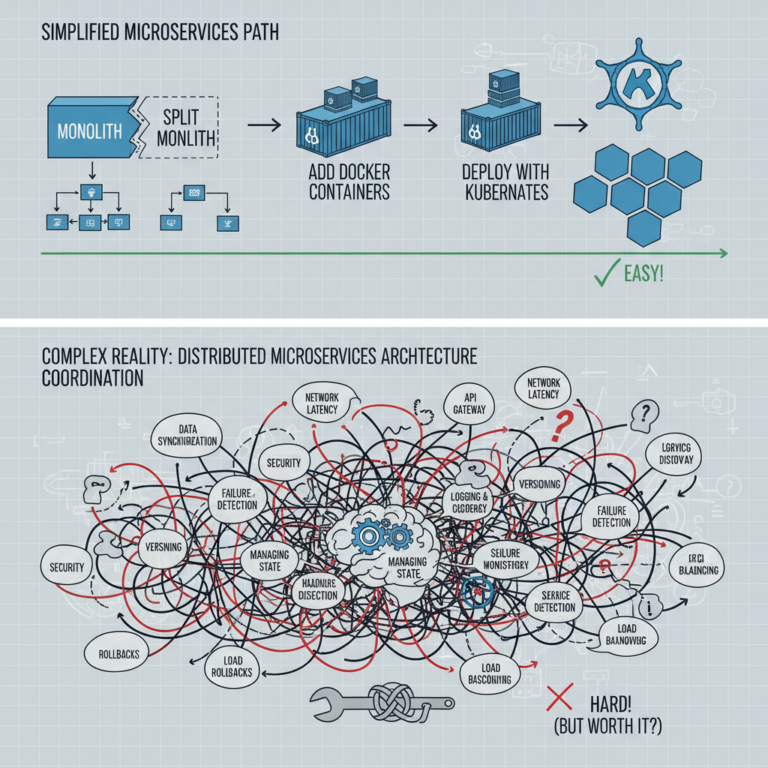
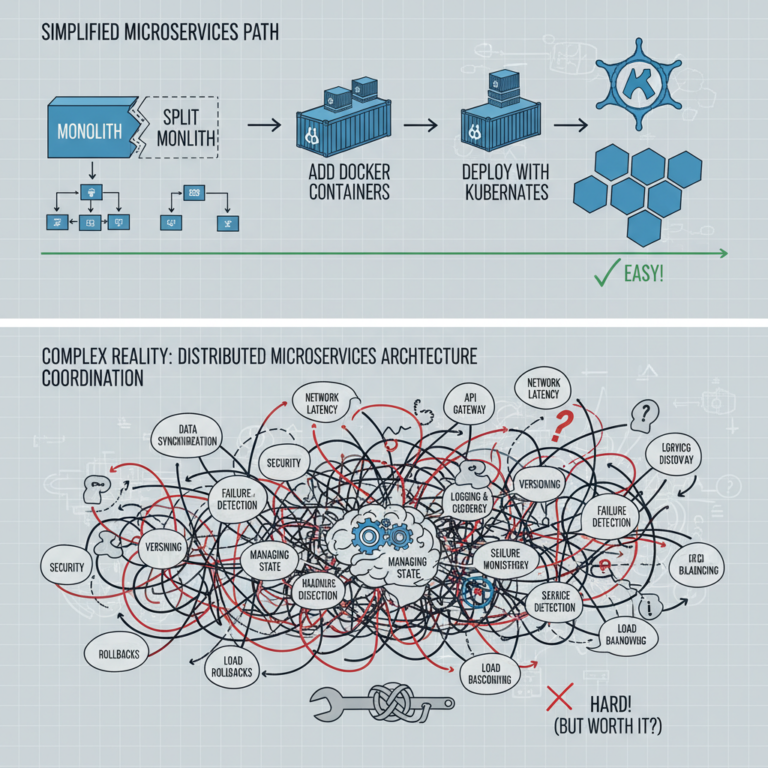
“It’s not the code that kills you. It’s the coordination.” This concise insight brilliantly captures the essence of the microservices journey. While many development teams envision microservices as a straightforward process of splitting up monoliths, the true challenge lies far deeper — in the orchestration and management of a complex distributed system.
The Allure of the Microservices Path
When teams consider transitioning to microservices, the roadmap often looks deceptively simple:
- Split the monolith.
- Add Docker containers for packaging.
- Deploy using Kubernetes for orchestration.
Understanding the Real Work: Managing Distributed Complexity
Breaking up the monolith is just the first step. What follows is managing a nuanced and highly complex distributed system. Each microservice is an autonomous piece of the puzzle but must collaborate seamlessly at runtime.
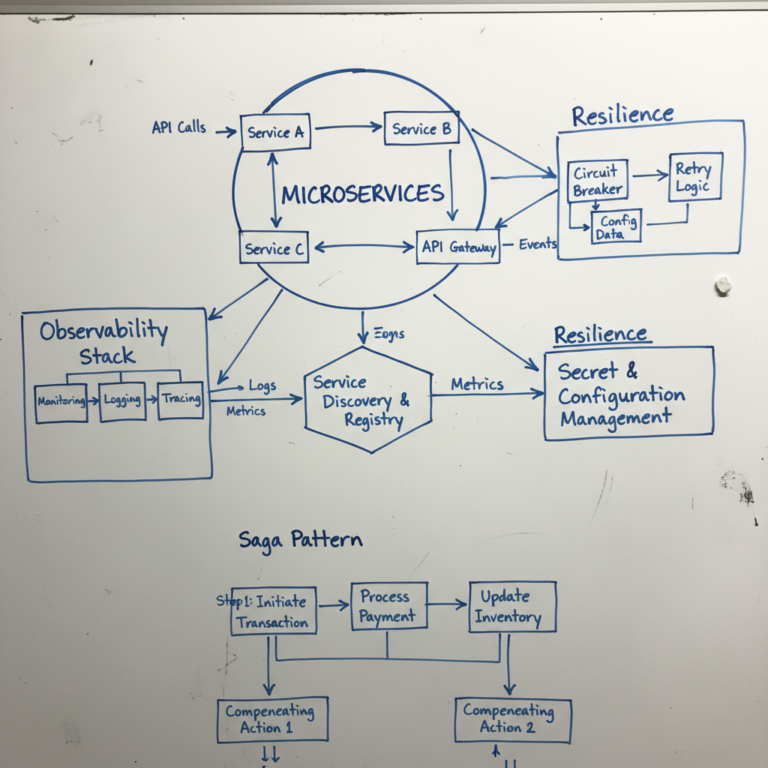
1. Observability Stack
In a distributed system, understanding what is happening inside each microservice is paramount. Without a robust observability stack, pinpointing issues or bottlenecks becomes nearly impossible.
2. Secret & Config Management
Tools like HashiCorp Vault or Kubernetes Secrets help ensure that secrets and configurations are centrally managed but accessed securely.
3. Data Consistency & Sagas
The Saga pattern is a popular approach for managing distributed transactions. It breaks a transaction into a series of smaller steps with compensating actions for failure handling.
4. Circuit Breakers & Retry Logic
Microservices communicate over the network, introducing risks like latency and failures. Circuit breakers help by detecting failures and preventing cascading errors.
5. Service Discovery & Registry
Service registries such as Consul, Eureka, or Kubernetes native tools automatically track service instances and provide discovery capabilities.
Actionable Insights for Teams Considering Microservices
- Invest in observability early: Setting up proper monitoring and tracing upfront facilitates debugging.
- Centralize configuration management: Avoid configuration sprawl.
- Embrace patterns like Sagas and Circuit Breakers: These are essential for robustness in distributed transactions.
- Automate wherever possible: Use tools for service discovery, secret management, and retries.
- Educate teams about distributed systems complexity: Build internal knowledge to handle failures gracefully.
Conclusion: The Journey Beyond Code Splitting
While breaking up a monolith might seem like the path to modernity, the real challenge of microservices architecture lies in the orchestration of distributed complexity. Teams that succeed are those that recognize this upfront and equip themselves with the right knowledge, tools, and processes.
For further reading, check out Microservices.io and Kubernetes Official Docs.